Mineral vs Chemical Sunscreen: Choose by Routine, Not Fear
A sunscreen decision can become strangely moralised. One side is called “cleaner”; the other is treated as automatically irritating. Neither shortcut helps when you are standing in front of a bathroom mirror, late for work, deciding whether a formula will sit under moisturiser and makeup—or whether you will actually apply enough of it.
The useful question is not “Which type wins?” It is: which broad-spectrum sunscreen can you use generously, comfortably and repeatedly in your own routine? Mineral and chemical sunscreen labels tell you something about the filters in the formula. They do not settle finish, eye comfort, white cast, pilling, allergy risk, water resistance or whether the product works with your skin goals.
This is an editorial comparison based on published product information and dermatology guidance, not first-hand wear testing or medical advice. Read more about how this desk works on our About page and Editorial Policy.
The short answer
AI-generated illustration — not a retailer product photo.
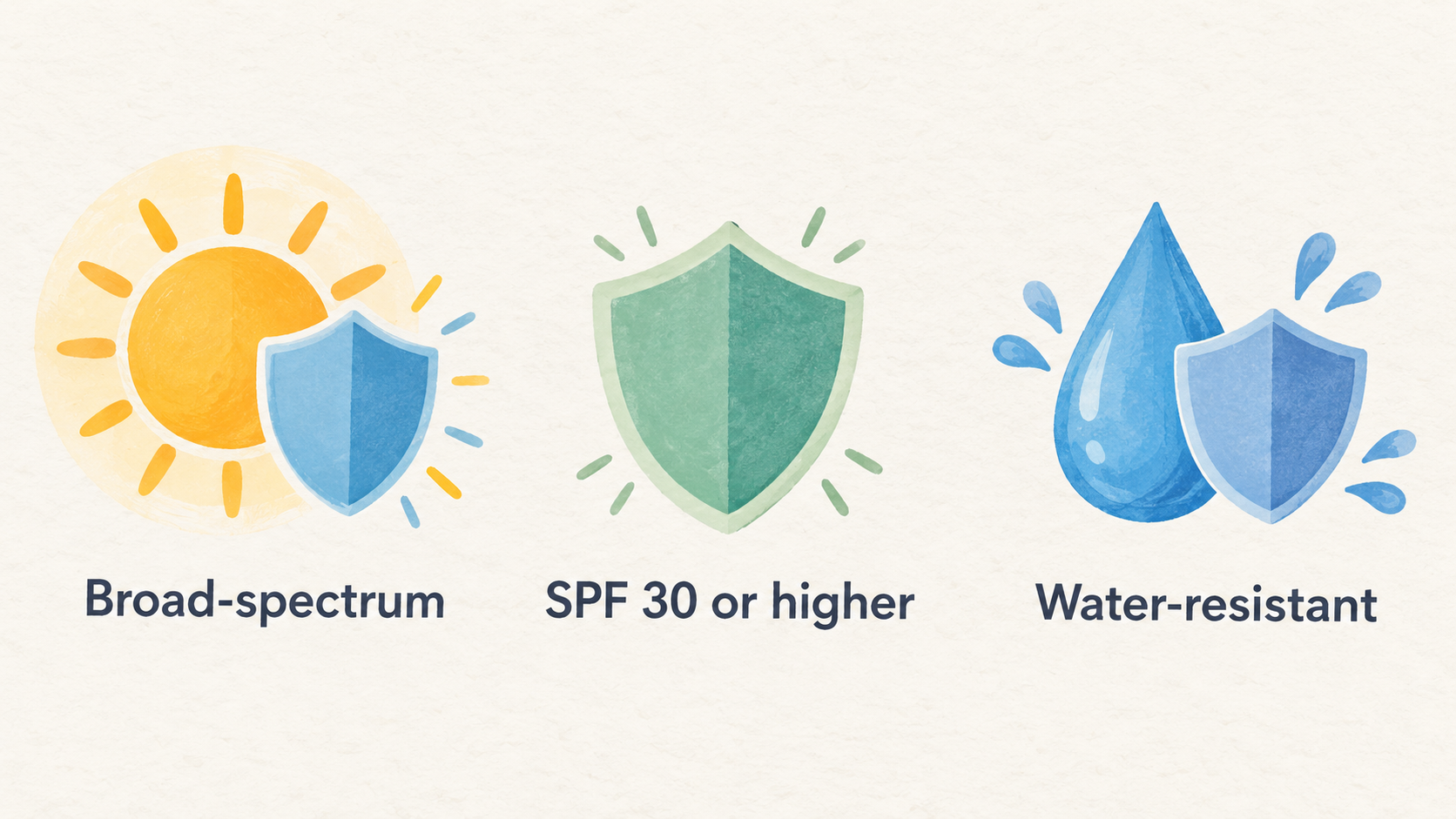
Mineral sunscreen usually means the active UV filters include zinc oxide, titanium dioxide or both. In US-facing educational guidance, the American Academy of Dermatology (AAD) calls these physical sunscreens. If neither mineral is present, the AAD categorises the formula as chemical; products containing both are hybrids. The AAD also stresses that mineral, chemical and hybrid formulas can all protect effectively when they are broad-spectrum, SPF 30 or higher and water-resistant. Read the AAD sunscreen guidance.
That is why mineral versus chemical is a starting point, not a complete buying guide. A mineral formula can feel heavy, elegant, tinted, dry or moisturising depending on the rest of its formula. An organic-filter formula can be comfortable for one person and unsuitable around another person’s eyes. Your decision should combine the INCI, the stated protection, texture, routine position and the conditions in which you will need to reapply.
| Decision point | Mineral sunscreen | Chemical / organic-filter sunscreen |
|---|---|---|
| INCI clue | Zinc oxide, titanium dioxide, or both | Uses organic UV filters rather than zinc oxide or titanium dioxide |
| Useful starting point | You specifically want mineral filters | You prioritise a fluid or invisible-feeling formula |
| What it does not guarantee | No white cast, no irritation, or a matte finish | No stinging, no shine, or universal suitability |
| Routine question | Will the finish work at the amount you need? | Will the formula stay comfortable around eyes and with your skincare? |
| What to verify | SPF, UVA indication, water resistance, tint and full INCI | SPF, UVA indication, water resistance, full INCI and finish claims |
Why the labels are less decisive than they sound
The old shorthand says mineral sunscreen “reflects” rays while chemical sunscreen “absorbs” them. The practical picture is more nuanced. The AAD explains that all sunscreen types form a protective layer and absorb UV radiation; physical formulas can also reflect some rays. That is a better reason to stop treating the labels as opposing teams.
Instead, start with protection standards. The AAD recommends broad-spectrum, SPF 30+ and water-resistant sunscreen. For UK shoppers, the British Association of Dermatologists also recommends looking for SPF 30 or above and balanced UVA/UVB protection, commonly indicated by a 4- or 5-star rating or the UVA logo. See the British Association of Dermatologists’ fact sheet.
Then ask a more personal question: what has stopped you using sunscreen consistently before? If the answer is shine, makeup pilling, dryness, white cast, a heavy feel, eye sting or uncertainty about reapplication, look for product evidence that addresses that specific issue. Do not assume the filter family settles it.
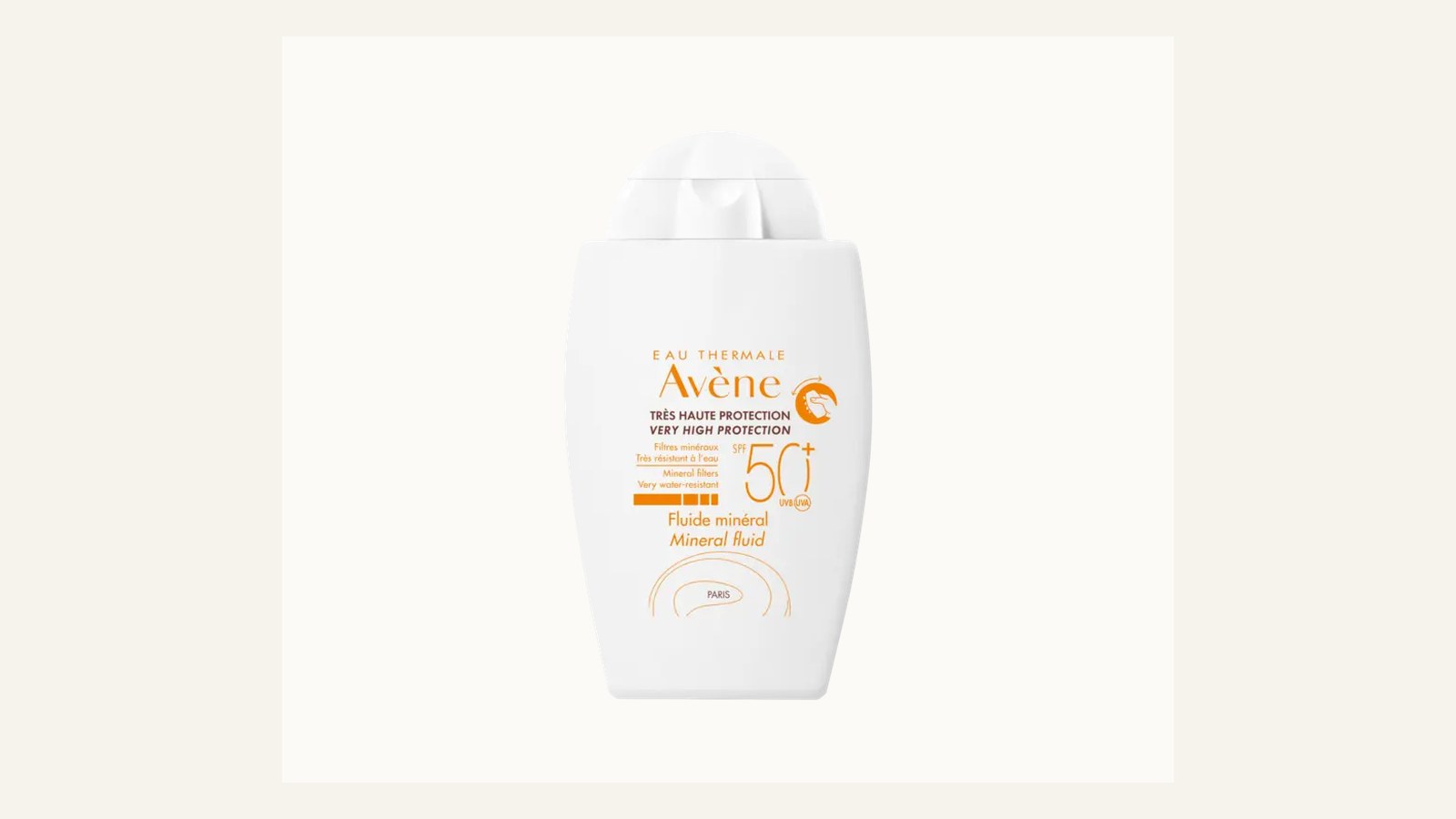
A mineral example: Avène SPF 50+ Mineral Fluid
Avène SPF 50+ Mineral Fluid is a clear example of a product built around mineral filters. The official UK page describes it as a 40ml, 100% mineral, fragrance-free and very water-resistant fluid for sensitive, reactive or intolerant skin. Its published ingredient list includes zinc oxide and titanium dioxide.
That makes it a relevant starting point if you specifically want to avoid a formula based on organic UV filters. Avène also describes a light, matte texture and no white film, but that is a brand claim rather than a promise for every skin tone, application amount or skincare routine. Treat it as a reason to investigate the product, not proof that the finish will be invisible for you.
The more useful fit question is whether a 40ml fluid feels realistic for your use pattern. Facial sunscreen is easy to under-apply, and a compact bottle may be convenient but needs replacing more often if you use the intended amount. If you have dry or reactive skin, pair any SPF with a simple moisturising routine rather than trying to make sunscreen solve every barrier concern. Our guide to barrier repair moisturisers can help you separate those decisions.
An organic-filter example: La Roche-Posay Anthelios UVMune 400 Invisible Fluid SPF50+
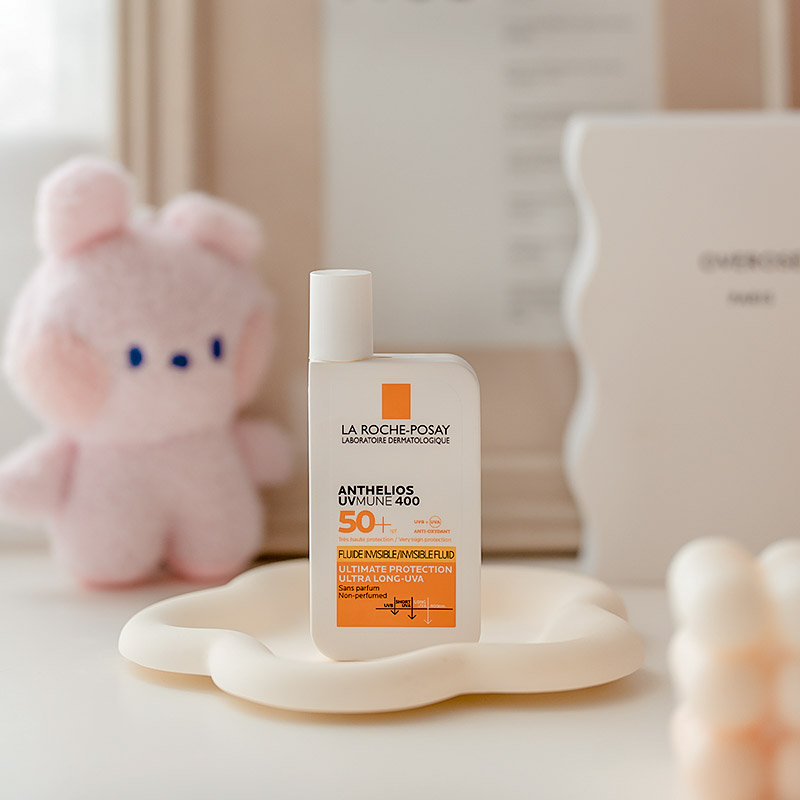
La Roche-Posay Anthelios UVMune 400 Invisible Fluid SPF50+ represents the kind of daily fluid that leads many shoppers towards organic-filter sunscreen. At the time of research, the official UK page listed 50ml at £21 and described SPF50+ broad protection, an invisible fluid finish and water, sweat and sand resistance. It also identifies Mexoryl 400 as part of its filtering system.
The attraction here is not that “chemical” is automatically better. It is that a small, lightweight fluid may be easier for some people to use every morning, especially if they dislike the feel of richer creams or need sunscreen to fit beneath makeup. La Roche-Posay says the formula is non-greasy and non-eye-stinging; those are useful product claims to note, but they are not a substitute for your own tolerance check.
If you are prone to sensitivity, simplify the routine around a new SPF. Introduce one product at a time, avoid adding several new active products in the same week and stop if irritation develops. This is especially relevant if your routine already includes stronger treatments. Our niacinamide versus vitamin C guide explains how to make active choices by skin goal rather than piling on products.
A value and quantity example: Altruist Sunscreen SPF50
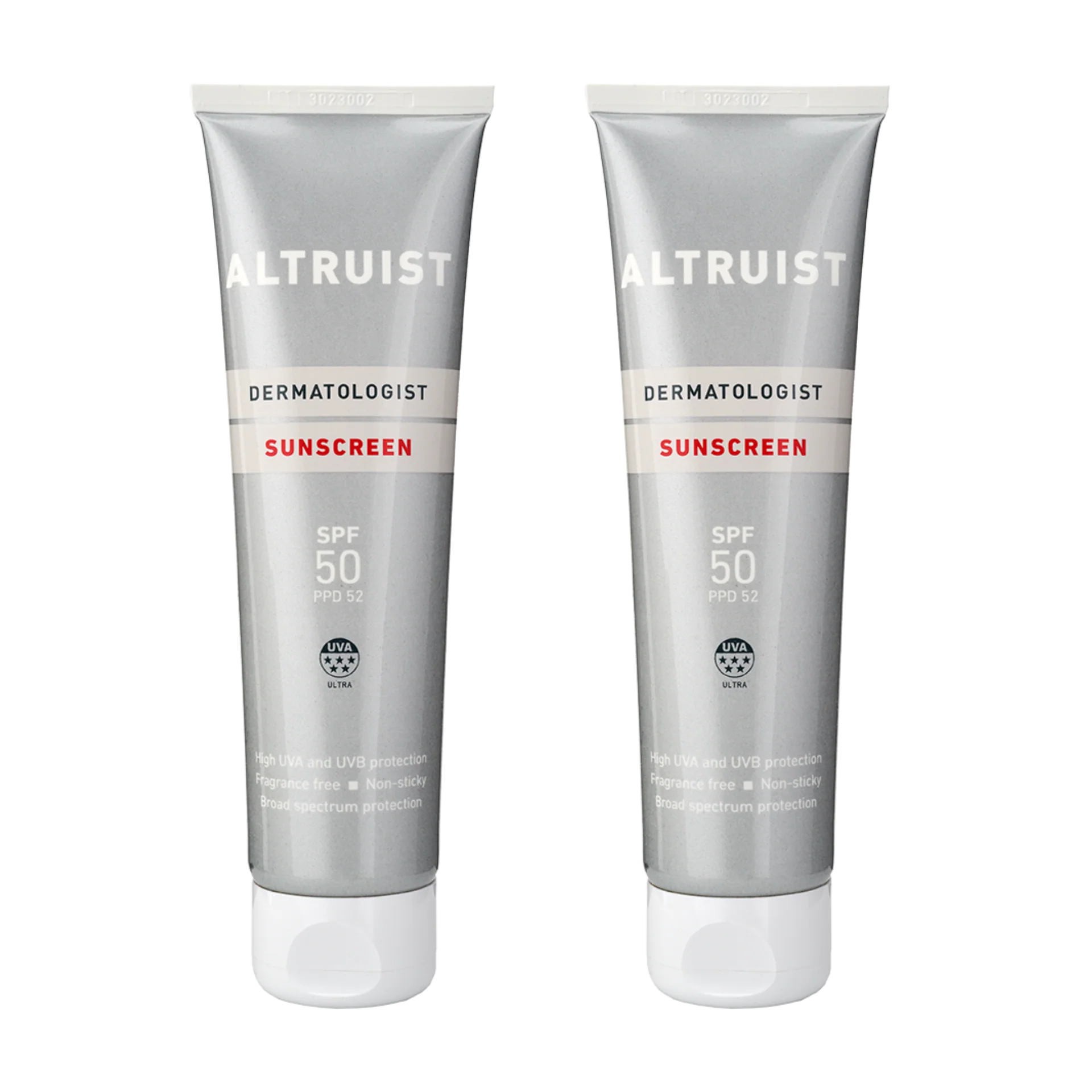
Altruist Sunscreen SPF50 provides a useful value comparison because the official page lists two 100ml bottles for £10.50 at the time of research. The brand describes SPF50, a 5-star ultra-UVA rating with PPD 52, water resistance, fragrance-free status and a non-sticky moisturiser-like feel.
This does not make it the correct answer for every face. A larger, lower-cost format can be attractive if you use sunscreen on face, neck and other exposed skin, or if running out is the main reason you skip reapplication. But affordability per millilitre only matters if the texture works with your morning routine and you are comfortable using it at the amount required for the labelled protection.
This is also why comparing one “mineral” product with one “chemical” product can mislead. Product size, finish, fragrance status, water resistance and the rest of the ingredient list may matter more to your daily behaviour than the headline filter category.
Choose by the problem you are actually trying to solve
Choose mineral sunscreen when the INCI itself is your priority
A mineral option is reasonable when you actively want zinc oxide, titanium dioxide or both, or when you are narrowing your choices after repeated problems with organic-filter formulas. Keep the claim modest: mineral filters may be a useful route for sensitive skin, but no category guarantees tolerance.
Check for a full INCI, stated SPF and UVA protection, and consider whether the finish will work at a generous application amount. Tinted options can be useful when white residue is the practical barrier, but tint matching is another variable to assess. If you have a diagnosed skin condition, persistent reactions or concern about a medication, seek advice from a pharmacist, dermatologist or other qualified clinician rather than using an article as treatment guidance.
Choose an organic-filter formula when finish drives adherence
An organic-filter fluid can be a sensible first choice when your main obstacle is finding something that layers well with moisturiser, makeup or a busy morning. Look at the individual product’s published finish, water-resistance claim, pack size and full INCI. Then judge it in your routine.
Do not make a “chemical” label a reason to use too little product. The British Association of Dermatologists notes that real-world application is often lower than the amount used in testing. A high SPF does not let you skip reapplication after swimming, sweating or extended outdoor exposure. Consistency beats a theoretically perfect formula that remains unopened in a drawer.
Consider a hybrid if the formula answers your real concern
Hybrid sunscreens contain mineral and organic filters. They are not a compromise by default or a category to avoid by default. They may be worth considering if you want to compare a particular finish, tint, protection claim or filter combination. Read the full label rather than relying on front-of-pack marketing.
For a broader daily SPF shortlist sorted by use case rather than filter ideology, see our facial sunscreen comparison. If your priority is a lighter routine with fewer overlapping products, our face serums by skin goal guide can help you decide what belongs underneath sunscreen.
A practical buying checklist
Before choosing either category, verify these points on the current product page or pack:
- Broad-spectrum protection: look for UVA and UVB protection, not SPF alone.
- SPF level: SPF 30 or higher is the dermatology baseline cited by AAD and BAD; choose the level that makes consistent use realistic.
- Water resistance: relevant for sport, heat, swimming and sweat, but not a reason to skip reapplication.
- Full INCI: check the actual filter list, fragrance and any ingredients you personally avoid.
- Pack size and replacement cost: a bargain is only useful if you can use enough and replace it before it runs out.
- Routine compatibility: consider moisturiser, active treatments, makeup and how often you need to reapply.
FAQ
Is mineral sunscreen safer than chemical sunscreen?
“Safer” is too broad to answer from the filter label alone. The AAD says mineral, chemical and hybrid sunscreens can all protect effectively when they meet broad-spectrum, SPF and water-resistance criteria. If you have a history of reactions, use the ingredient list and your own tolerance history to narrow options, and seek professional advice for persistent or severe symptoms.
Does mineral sunscreen always leave a white cast?
No. The formula, tint, particle treatment, skin tone and application amount all affect the visible finish. Some mineral products are marketed as sheer or tinted, but those claims should be checked in context. Avoid choosing a sunscreen solely because it promises “invisible” wear; confirm the protection information and decide whether the product works in your actual routine.
Is chemical sunscreen bad for sensitive skin?
Not automatically. Some people find specific formulas uncomfortable; others use them without issue. Sensitive skin is not a single response pattern, and a product’s complete formula matters more than the headline category. Introduce one new sunscreen at a time and stop use if you develop irritation. Medical assessment is appropriate for ongoing reactions.
Can I use a mineral sunscreen with vitamin C or niacinamide?
Usually, sunscreen is the final morning skincare step before makeup, while serums are applied underneath according to their directions. The question is less about mineral versus chemical and more about whether the combined routine is comfortable and stable on your skin. Add new products gradually rather than changing serum, moisturiser and SPF all at once.
Final verdict
Mineral versus chemical sunscreen is not a referendum on good or bad skincare. It is an ingredient clue. Mineral formulas may be the right route when zinc oxide or titanium dioxide is your priority; organic-filter fluids may make more sense when a lightweight everyday finish is what helps you apply enough.
Start with broad-spectrum protection, SPF 30+ and water resistance. Then choose the formula that fits your skin, schedule and budget well enough to use without drama. The sunscreen that becomes a consistent habit is more useful than the category argument you never put on your face.
Sources and editorial notes
- American Academy of Dermatology: Sunscreen FAQs — filter categories, SPF and reapplication guidance.
- British Association of Dermatologists: Sun Protection Fact Sheet — UK-focused SPF and UVA/UVB balance guidance.
- Avène SPF 50+ Mineral Fluid — product type, 40ml format and published INCI.
- La Roche-Posay Anthelios UVMune 400 Invisible Fluid SPF50+ — product format, price and published claims.
- Altruist Sunscreen SPF50 — pack size, price and published protection claims.
Prices and product details were checked on 12 July 2026 and can change. This article may contain qualifying commercial links; they do not change the editorial assessment. See our Editorial Policy for how recommendations and disclosures are handled.
Editorial information: Read our affiliate disclosure.