AI-generated illustration — not a retailer product photo.
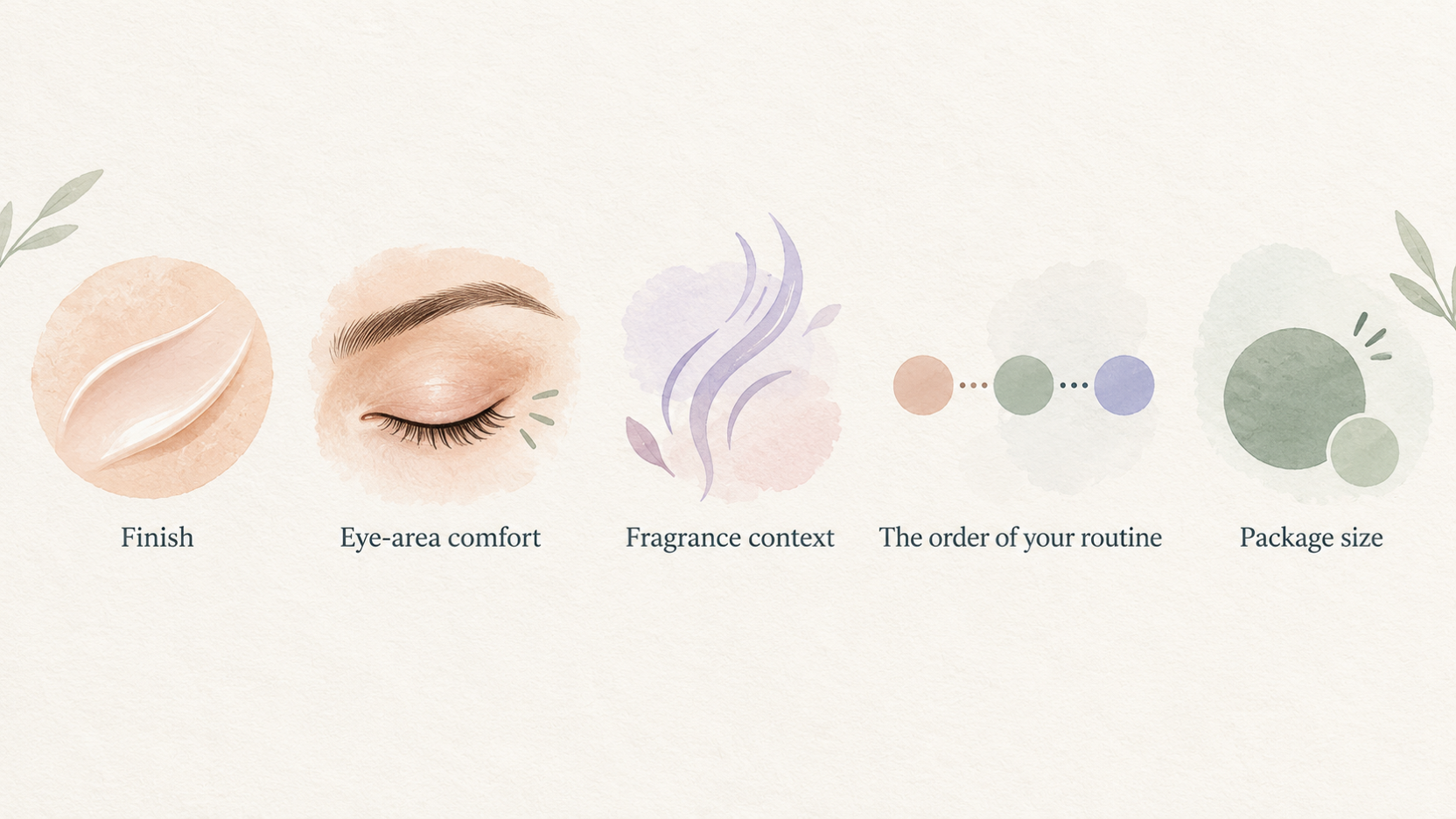
Daily sunscreen only works when it is the product you are willing to use in a real morning routine—not the theoretically perfect bottle that stays unopened. That is why a useful facial SPF comparison has to go beyond a headline protection number. Finish, eye-area comfort, fragrance context, the order of your routine, package size and the cost of using enough all matter.
This shortlist is deliberately narrow. It compares three UK-available SPF50 formulas with different jobs: La Roche-Posay Anthelios UVMune 400 Invisible Fluid SPF50+ for a compact, lightweight fluid; Eucerin Sun Face Oil Control Gel-Cream SPF50+ for people who prioritise a matte finish; and Altruist Sunscreen SPF50 for value and a high-UVA specification. “Best” here means best matched to a clearly stated use case, not a claim that one product will suit every face.
Our desk reviews ingredient lists, current brand information, routine fit and value. We do not present these products as personally tested, and we do not provide medical advice. Read more about how we work on our About page and Editorial Policy. Some outbound product links may earn us a commission; that does not change the selection criteria or the limitations noted below.
The short answer: which daily facial sunscreen fits which routine?
AI-generated illustration — not a retailer product photo.
| Product | Best fit | What stands out | Watch-out |
|---|---|---|---|
| La Roche-Posay Anthelios UVMune 400 Invisible Fluid SPF50+ | Sensitive-skin context, compact fluid texture, outdoor commuting | SPF50+, broad-spectrum positioning, ultra-resistant fluid, current 50ml format | A thin fluid can feel less moisturising in a dry routine; shake before use |
| Eucerin Sun Face Oil Control Gel-Cream SPF50+ | Oily or blemish-prone skin seeking a matte finish | Oil-control positioning, fragrance-free and non-comedogenic claims, 50ml gel-cream | Matte feel is a preference, not a guarantee; very dry skin may need a compatible moisturiser underneath |
| Altruist Sunscreen SPF50 | Value-focused households and people who prefer a larger-format lotion | SPF50, 5-star UVA / PPD 52 claim, fragrance-free and non-comedogenic claims | The 100ml lotion format is less handbag-friendly and may feel richer than a face-specific fluid |
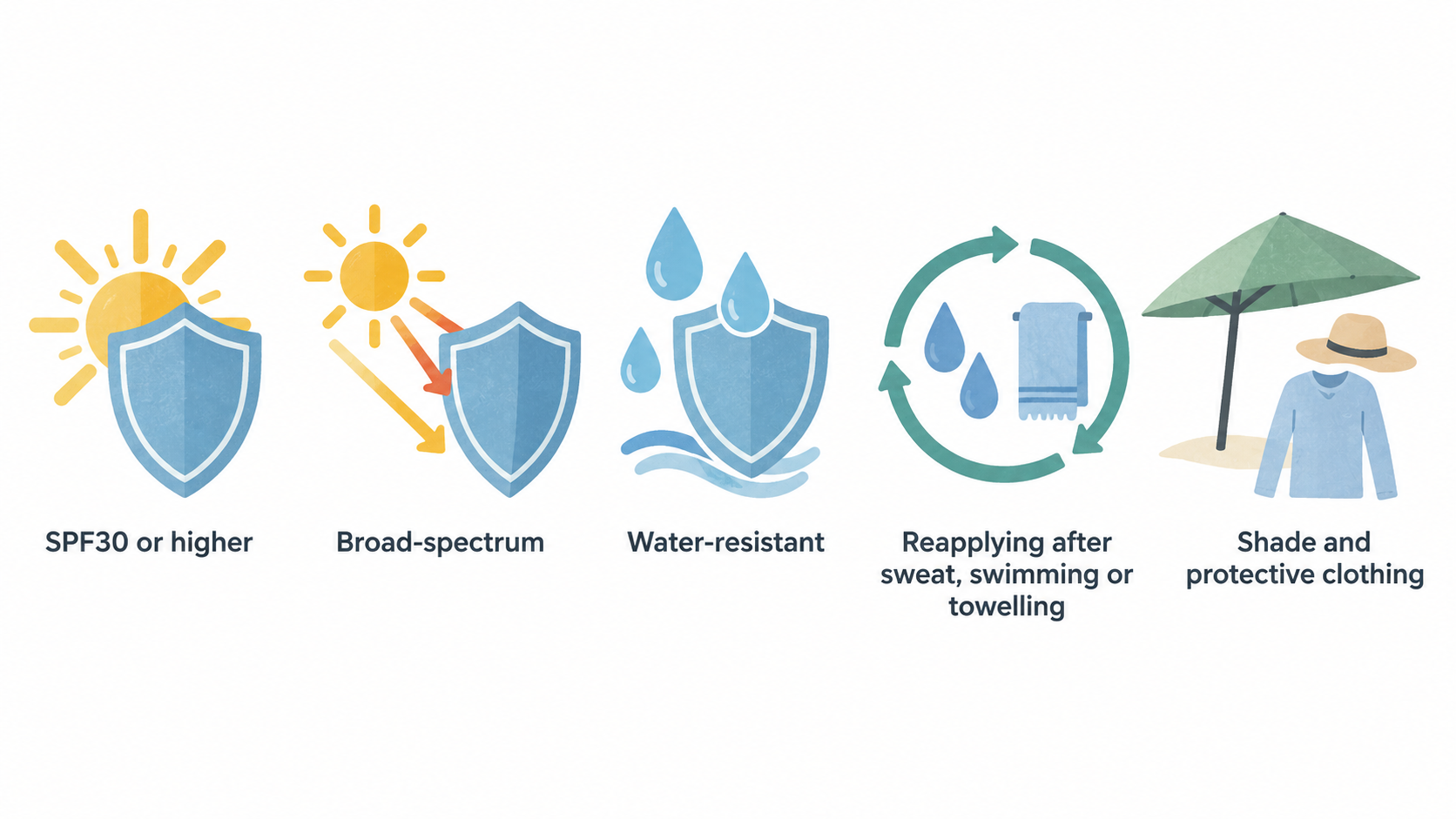
The American Academy of Dermatology’s practical starting point is sunscreen labelled SPF30 or higher, broad-spectrum and water-resistant. Those are purchase-screening criteria, not a substitute for using enough product or reapplying after sweat, swimming or towelling. The NHS likewise places sunscreen within a wider sun-safety approach that includes shade and protective clothing. AAD’s sunscreen guidance and NHS sun-safety advice are useful neutral references before comparing cosmetics claims.
How we narrowed this daily SPF50 shortlist
AI-generated illustration — not a retailer product photo.
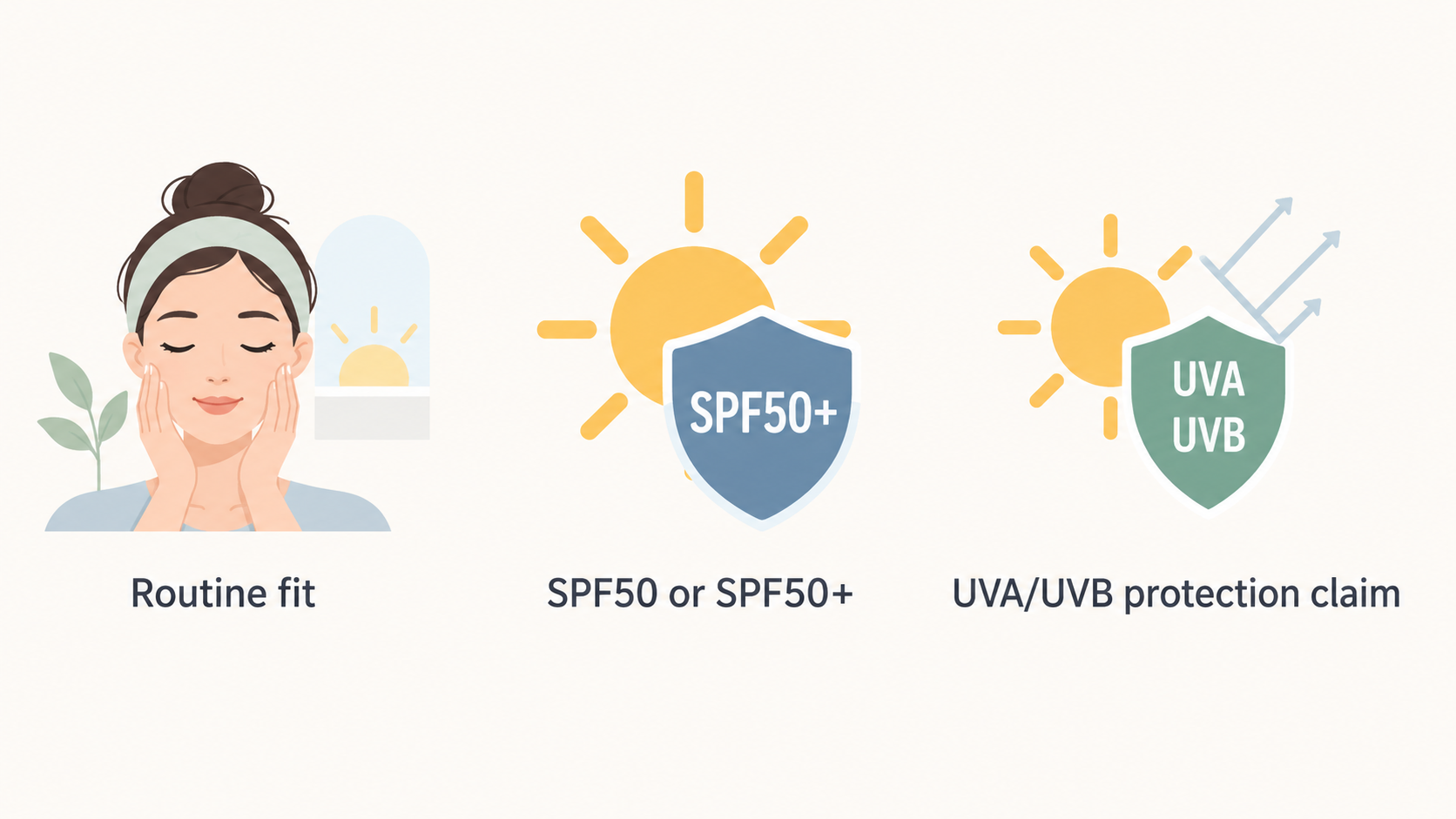
A facial sunscreen can have an impressive filter system and still be a poor routine fit. We used four practical filters.
First, the formula needs a clearly stated high-protection position. All three products are marketed at SPF50 or SPF50+, and all give a form of UVA/UVB protection claim on their current official pages. That makes them reasonable candidates for a daily shortlist, but it does not establish identical real-world performance across every person, application amount or activity level.
Second, texture matters because it affects consistency. A thin fluid may layer more easily under makeup; a gel-cream can appeal when shine is the main objection to daily SPF; and a lotion can make sense when the same product will be used on face, neck and body. None of those are moral categories. The useful choice is the one you can apply generously without quietly using too little.
Third, we look at tolerance context rather than promising that a product is “safe” for everyone. Fragrance-free or sensitive-skin positioning can be relevant, but an individual can still react to a UV filter, preservative or a product combination. If you have a known allergy, active dermatitis, persistent stinging or a diagnosed skin condition, seek personalised advice rather than treating a roundup as a prescription.
Finally, value is not the shelf price alone. A small 50ml bottle may suit a bag and travel routine; a larger lotion may lower the cost of regular use but be a less elegant makeup-layering product. Current prices and availability can change, so check the manufacturer or retailer page on the day you buy.
1. La Roche-Posay Anthelios UVMune 400 Invisible Fluid SPF50+: for a compact fluid and sensitive-skin context
La Roche-Posay positions Anthelios UVMune 400 Invisible Fluid as a high-protection SPF50+ fluid for sensitive skin. Its UK product page lists a 50ml bottle, broad protection claims and water, sweat and sand resistance. At the time this guide was checked in July 2026, the direct price shown was £21, though that figure should be treated as a snapshot rather than a price promise.
The routine appeal is clear: the product is a fluid rather than a rich cream, and the brand describes it as non-greasy, non-sticky and designed not to leave white marks. The current ingredient list includes several organic UV filters, plus glycerin and other texture-supporting ingredients. That combination gives a useful clue about its role: a high-protection final morning step for someone who wants a light, portable bottle rather than a moisturiser-like finish.
The important limitation is that “sensitive skin” on a product page is a positioning signal, not proof of universal tolerance. The brand says the formula is hypoallergenic and dermatologically tested, but its own page also tells customers to check the package ingredient list for the most current version. That is sensible advice for any sunscreen, especially if your eyes sting easily or you have reacted to a filter before.
Choose this one when you want a small, shake-before-use fluid that can sit at the end of a daytime routine and you value a water- and sweat-resistant format. For a routine built around actives, pair your sunscreen choice with a less crowded morning routine; our face serums by skin goal guide can help you avoid adding every active at once.
2. Eucerin Sun Face Oil Control Gel-Cream SPF50+: for oily or blemish-prone skin
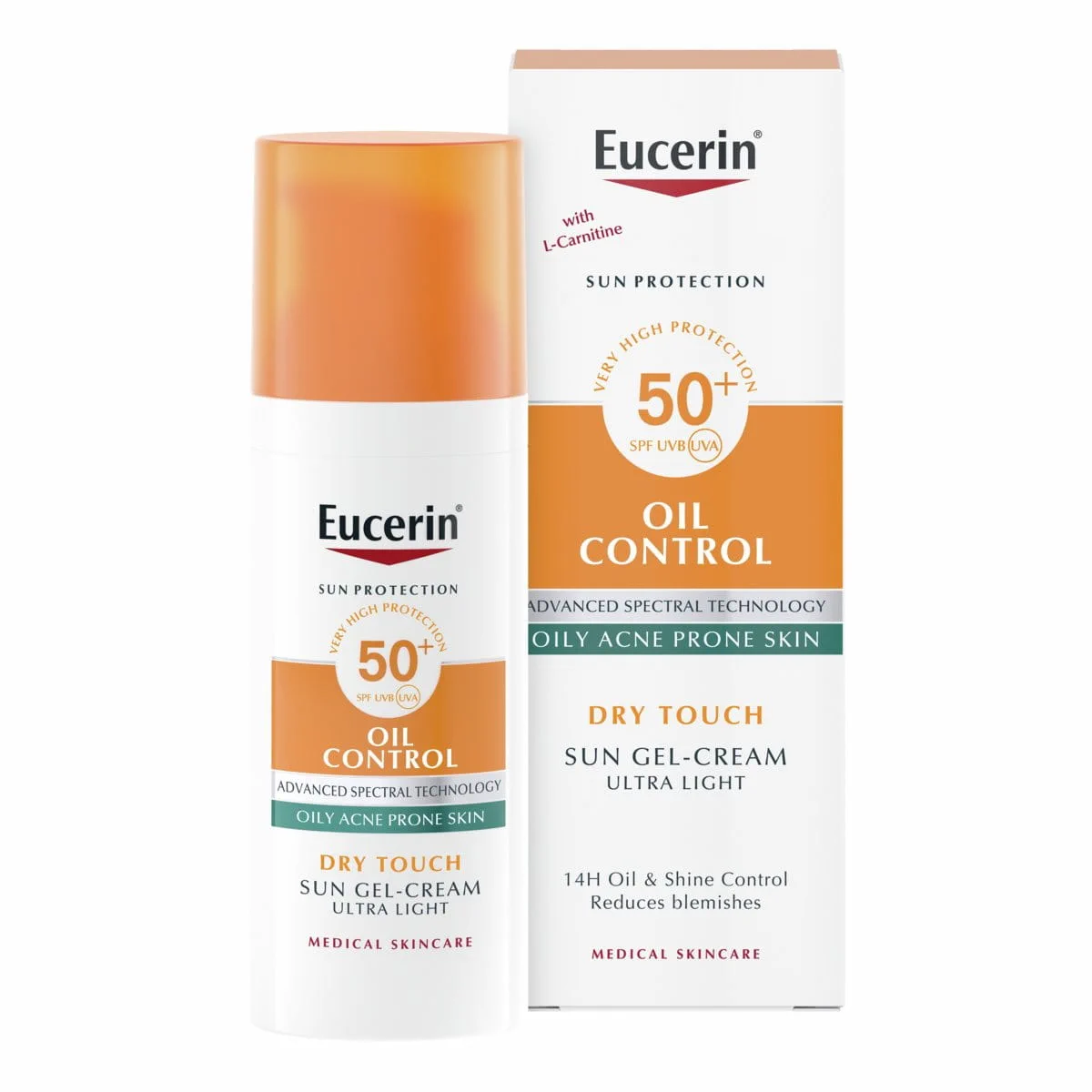
Eucerin’s Sun Face Oil Control Gel-Cream SPF50+ is the most targeted option here for someone whose main barrier to consistent SPF use is visible shine. The official product page describes it as an ultra-light, mattifying formula for oily and acne-prone skin with very high UVA/UVB protection. It also states that the product is fragrance-free and non-comedogenic, and presents it as suitable under makeup.
The formula’s positioning is not just “less greasy.” Eucerin highlights L-Carnitine, Licochalcone A and glycyrrhetinic acid, alongside an oil-control claim. The page reports 14-hour oil-and-shine control from a small self-assessment clinical study and an in-vitro oil-reduction figure. Those figures are useful brand-context details, but they should not be read as a promise that every person will see the same finish for a full workday.
For daily use, this is the most logical choice of the three for a person who routinely skips SPF because most creams feel heavy or make makeup slide. A matte sunscreen can be easier to use in sufficient quantity if it reduces the urge to blot or wash it off. Still, skin that is oily can also be dehydrated; if this type of formula feels tight, the answer may be a compatible light moisturiser underneath rather than using less sunscreen.
Choose Eucerin when your priority is a fast-absorbing, low-shine facial finish and you prefer an option explicitly developed around oily or blemish-prone skin. If your barrier is currently compromised, start by stabilising the rest of the routine; see our barrier repair moisturisers guide for ingredient-led context.
3. Altruist Sunscreen SPF50: for high-UVA value in a larger lotion format
Altruist Sunscreen SPF50 offers a different proposition: a larger-format lotion with a high-UVA specification and an unusually value-focused direct price. The official product page currently sells it as a 2 × 100ml pack and states SPF50, broad-spectrum protection, 5-star ultra-UVA protection with PPD 52, water resistance, fragrance-free status and non-comedogenic positioning.
Its ingredient list includes glycerin and panthenol alongside a broad set of UV filters. That does not make it a treatment product, but it does suggest why the brand describes the texture as moisturiser-like rather than as a weightless facial fluid. For people who use sunscreen across face, neck, ears and other exposed skin daily, a larger lotion can make better practical sense than reserving a small 50ml bottle for occasional use.
The trade-off is cosmetic elegance. A product intended for all skin types and supplied in a 100ml format may be exactly what a value-focused routine needs, yet it may not be the first choice for someone who wants a near-invisible, ultra-matte layer below foundation. The product page also currently shows the selected pack as sold out, so availability needs checking.
Choose Altruist when you prioritise high-UVA specifications, fragrance-free/non-comedogenic claims and the economics of applying enough product. It may be particularly practical if you want one SPF for face, neck and body, but patch test and assess finish before committing to it as a makeup-day staple.
Ingredient and tolerance context: what the labels can—and cannot—tell you
Sunscreen conversations often collapse into “mineral versus chemical.” That is too blunt to be useful here. All three products use a mix of modern organic UV filters and, in Altruist’s case, titanium dioxide appears in the declared ingredient list as well. What matters in a daily decision is the labelled protection, the current ingredient list, the formula’s feel and your own tolerance.
For people prone to clogged pores, AAD suggests looking for “non-comedogenic” or “won’t clog pores” wording. That is a useful shopping filter, not a certainty: acne is multifactorial, and a product’s performance can change when combined with richer moisturisers, foundation or frequent touching of the face. Eucerin and Altruist both make non-comedogenic claims on their current pages; La Roche-Posay instead foregrounds sensitive-skin and resistance claims.
For people who sting around the eyes, avoid assuming a face sunscreen will behave the same way for everyone. The AAD notes that a sunscreen stick around the eye area can be a practical alternative. If any product burns, causes a persistent rash or makes your eyes water, stop using it and obtain appropriate advice. A longer ingredient list is not automatically worse, and a minimalist list is not automatically non-irritating.
How to build a routine around daily facial sunscreen
Use sunscreen as the final morning skincare step, before makeup. La Roche-Posay and Eucerin both give that routine position on their product pages. Keep the preceding routine simple enough that you can tell what is causing a problem if pilling or irritation appears.
A practical order is:
- Cleanse if your skin needs it in the morning.
- Apply a lightweight hydrating or treatment step only if it is already working for you.
- Use moisturiser if your skin needs it.
- Apply facial sunscreen generously and evenly over exposed skin.
- Reapply when you are outside for extended periods and after swimming, sweating or towelling.
The exact amount depends on the area covered and the product instructions. The key behavioural point is not to stretch a small amount of sunscreen farther than intended because the texture feels expensive or inconvenient. If you repeatedly under-apply a beautifully packaged fluid, a less glamorous but more usable lotion may provide better real-world value.
Which one should you buy?
Pick La Roche-Posay Anthelios UVMune 400 Invisible Fluid SPF50+ if you want a compact, high-protection fluid with a sensitive-skin and resistance-oriented brief. It is the most natural fit for commuting, travel and people who prefer a thin final skincare layer.
Pick Eucerin Sun Face Oil Control Gel-Cream SPF50+ if shine, oiliness or makeup compatibility are the reasons you have not stayed consistent with daily SPF. Its finish and oily-skin positioning are the central reasons to choose it, not a claim that it is objectively superior for every complexion.
Pick Altruist Sunscreen SPF50 if you value a larger format, a high-UVA specification and fragrance-free/non-comedogenic claims more than a face-specific ultra-fluid feel. It is a sensible candidate for regular face-and-neck use when you first confirm that the texture suits your routine.
The most defensible recommendation is simple: buy the sunscreen whose labelled protection, ingredient context, finish and price make it realistic for you to apply enough, every day. Revisit the current product page before purchasing, because formulas, availability and retailer terms can change.
FAQ
Is SPF50 necessary for daily facial sunscreen?
SPF30 or higher is the AAD baseline for sunscreen selection, alongside broad-spectrum protection and water resistance. SPF50 can be a practical choice when you prefer a higher labelled protection level, but daily benefit still depends on applying it generously and reapplying when needed. Choose a texture you can use consistently rather than relying on the number alone.
Which facial sunscreen is better for oily skin?
Eucerin Sun Face Oil Control Gel-Cream SPF50+ is the most targeted choice in this shortlist because its official positioning is specifically for oily and acne-prone skin, with a matte finish and non-comedogenic claim. That does not mean every oily skin type will prefer it; trial the finish with your usual moisturiser and makeup before relying on it for an event day.
Can sensitive skin use a chemical-filter sunscreen?
Some people with sensitive skin use organic-filter sunscreens comfortably, while others react to particular ingredients or combinations. La Roche-Posay’s Anthelios fluid is marketed for sensitive skin, but no roundup can guarantee individual tolerance. Check the current ingredient list, patch test if appropriate and stop using a product that causes persistent discomfort.
Is a larger sunscreen bottle better value for the face?
It can be. A larger bottle such as Altruist SPF50 may lower the cost per use and make it easier to apply sunscreen to face, neck and other exposed areas without rationing it. The compromise is that a larger lotion may be less portable or less cosmetically elegant than a 50ml facial fluid. Value is only real if you enjoy using the product.
How often should I reapply facial sunscreen?
Follow the product instructions and reapply regularly when you are exposed to sun, especially after swimming, sweating or towelling. AAD and NHS guidance both treat sunscreen as one part of wider sun protection, not a reason to ignore shade, clothing and time outdoors. For ordinary indoor days, your needs may differ from a day spent outside.
Sources and editorial notes
- La Roche-Posay: Anthelios UVMune 400 Invisible Fluid SPF50+ — product format, current price snapshot, protection, resistance and ingredient information.
- Eucerin: Sun Face Oil Control Gel-Cream SPF50+ — oily/acne-prone positioning, finish, ingredient and product claims.
- Altruist: Sunscreen SPF50 — SPF/UVA, ingredients, value and product claims.
- American Academy of Dermatology: choosing sunscreen — general selection criteria and tolerance context.
- NHS: sunscreen and sun safety — public-health sun-safety context.
This guide was checked in July 2026. Product formulas, pricing and stock can change; use the current pack and retailer information as the final reference. See our Editorial Policy for our sourcing and affiliate disclosure approach.
Editorial information: Read our affiliate disclosure.