AI-generated illustration — not a retailer product photo.
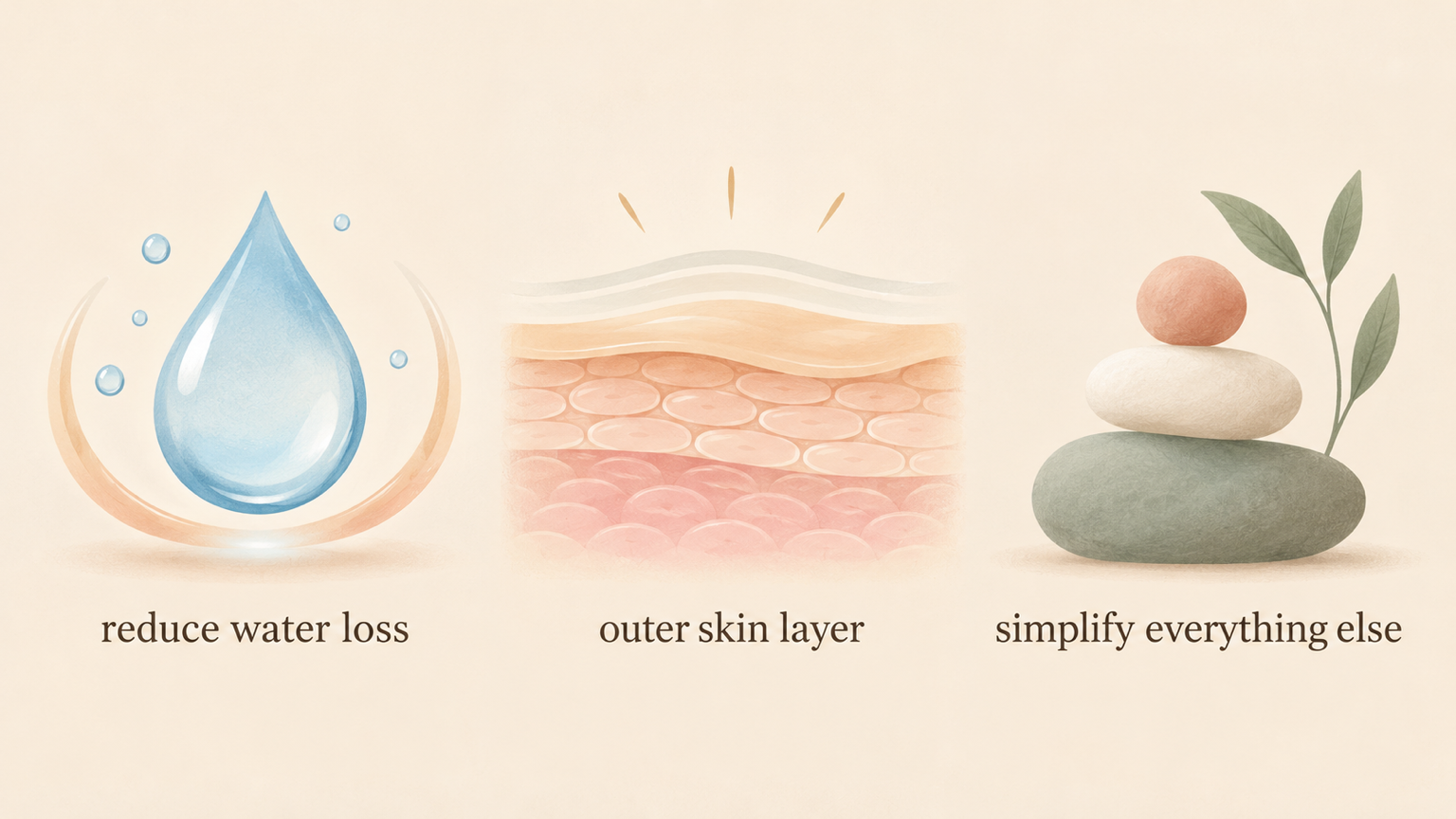
Skin can feel suddenly “sensitive” after a week of extra exfoliation, a new retinoid, cold weather, harsh cleansing, or simply too many products layered together. The answer is not automatically a longer routine. Often, the useful next step is a plain moisturiser that helps reduce water loss and gives the outer skin layer a calmer environment while you simplify everything else.
That is what this guide means by a barrier repair moisturiser. It is not a medical diagnosis or a promise to cure eczema, acne, rosacea, or a damaged skin condition. It is a practical comparison of moisturisers whose formulas and textures make sense when skin feels dry, tight, flaky, or less tolerant than usual.
The short version: CeraVe Moisturising Cream is the most straightforward all-round option for a ceramide-focused cream; La Roche-Posay Cicaplast Baume B5+ suits a richer, more protective recovery layer; and Avène Cicalfate+ Restorative Protective Cream is the most deliberately occlusive option in this shortlist. The right pick depends on whether you need an everyday cream, a temporary buffer after irritating products, or a more protective finish for selected dry areas.
For how we make those distinctions, see our editorial policy and about Dave Roberts. We assess formulas, routine position, packaging and value context; we do not present brand marketing as medical advice.
What a barrier repair moisturiser can realistically do
AI-generated illustration — not a retailer product photo.
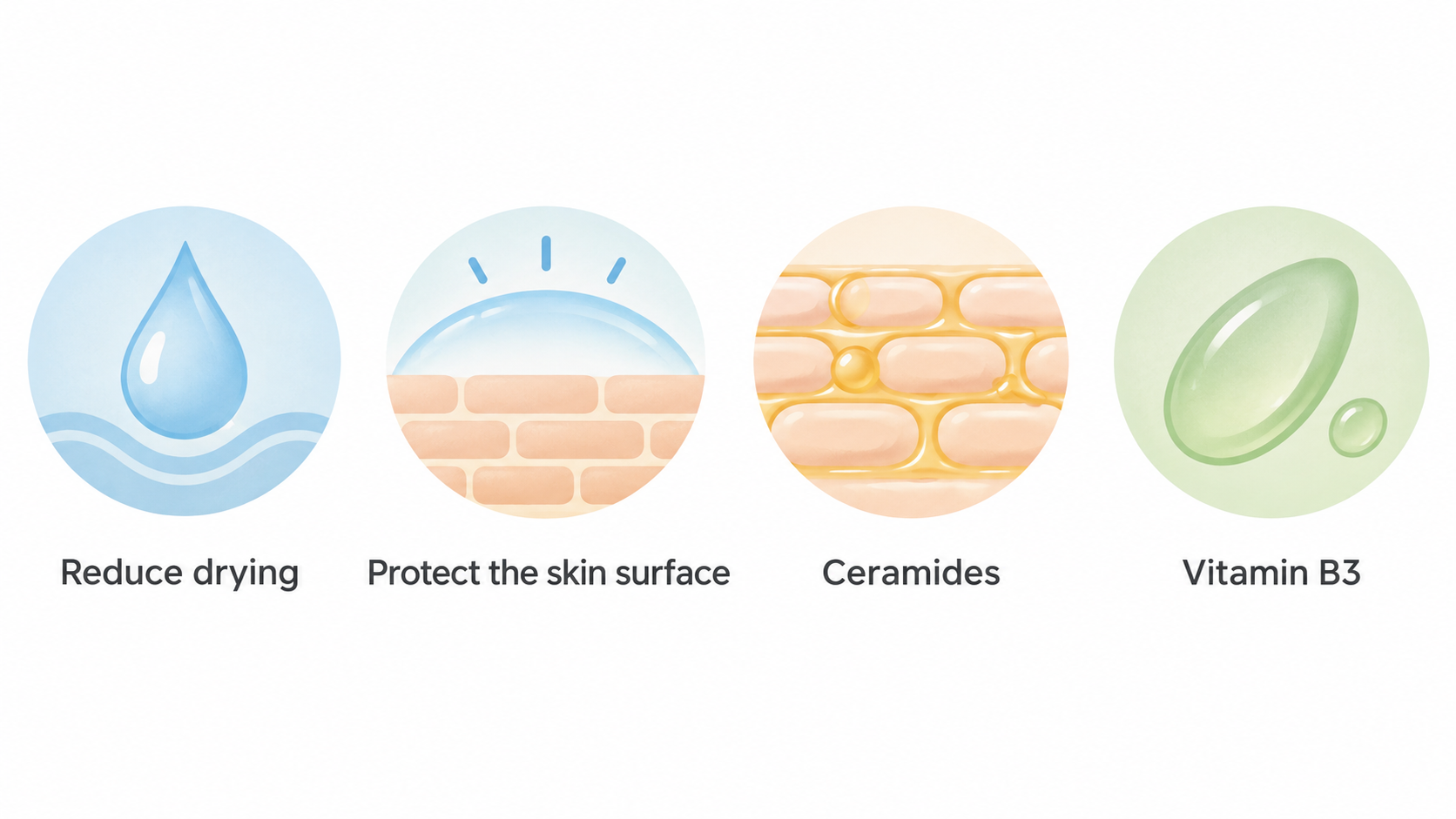
The skin barrier is often described as a brick-and-mortar structure: corneocytes form the “bricks,” while lipids help organise the surrounding matrix. When this layer is disrupted, transepidermal water loss can rise and skin may become more reactive to irritants. DermNet’s barrier cream overview notes that barrier products aim to reduce drying and help protect the skin surface; it also identifies ceramides and vitamin B3 as ingredients used in newer barrier-focused formulas.
A moisturiser does not need a dramatic ingredient list to be useful. In practice, the formula usually needs some combination of:
- Humectants, such as glycerin, which help hold water in the outer layer of skin.
- Emollients, which improve the feel of rough or dry skin.
- Occlusives, which form a surface layer that slows water loss.
- Barrier-associated lipids, such as ceramides, which are relevant to the lipid matrix of the stratum corneum.
Texture is not cosmetic trivia. A light lotion may be easy to use daily but insufficient for visibly dry patches; a dense balm may be reassuring on compromised-feeling skin but uncomfortable under sunscreen or makeup. DermNet also notes that creams are often a good broad-use format, while ointment-like textures can suit very dry areas but feel greasy on visible skin.
None of these products is a substitute for clinical advice if you have a spreading rash, pain, swelling, cracked or infected skin, or a reaction that does not settle after stopping the suspected trigger. Burning, stinging, and contact reactions can happen with moisturisers too, particularly when skin is already reactive.
The shortlist at a glance
AI-generated illustration — not a retailer product photo.
| Product | Ingredient and texture signal | Better fit | Think twice if |
|---|---|---|---|
| CeraVe Moisturising Cream | Ceramides, hyaluronic acid, cream texture | You want a simple daily face-and-body moisturiser for dry skin | You prefer a very light gel texture or know richer creams clog you |
| La Roche-Posay Cicaplast Baume B5+ | Glycerin, panthenol, dimethicone, shea butter, madecassoside | Your routine needs a richer buffer after friction, dryness, or active overuse | You need the lightest possible daytime finish |
| Avène Cicalfate+ Restorative Protective Cream | Glycerin, mineral oil, zinc oxide, copper-zinc complex, protective cream texture | You want a more protective layer for targeted dry or irritated-feeling areas | You dislike occlusive finishes or are managing easily congested skin |
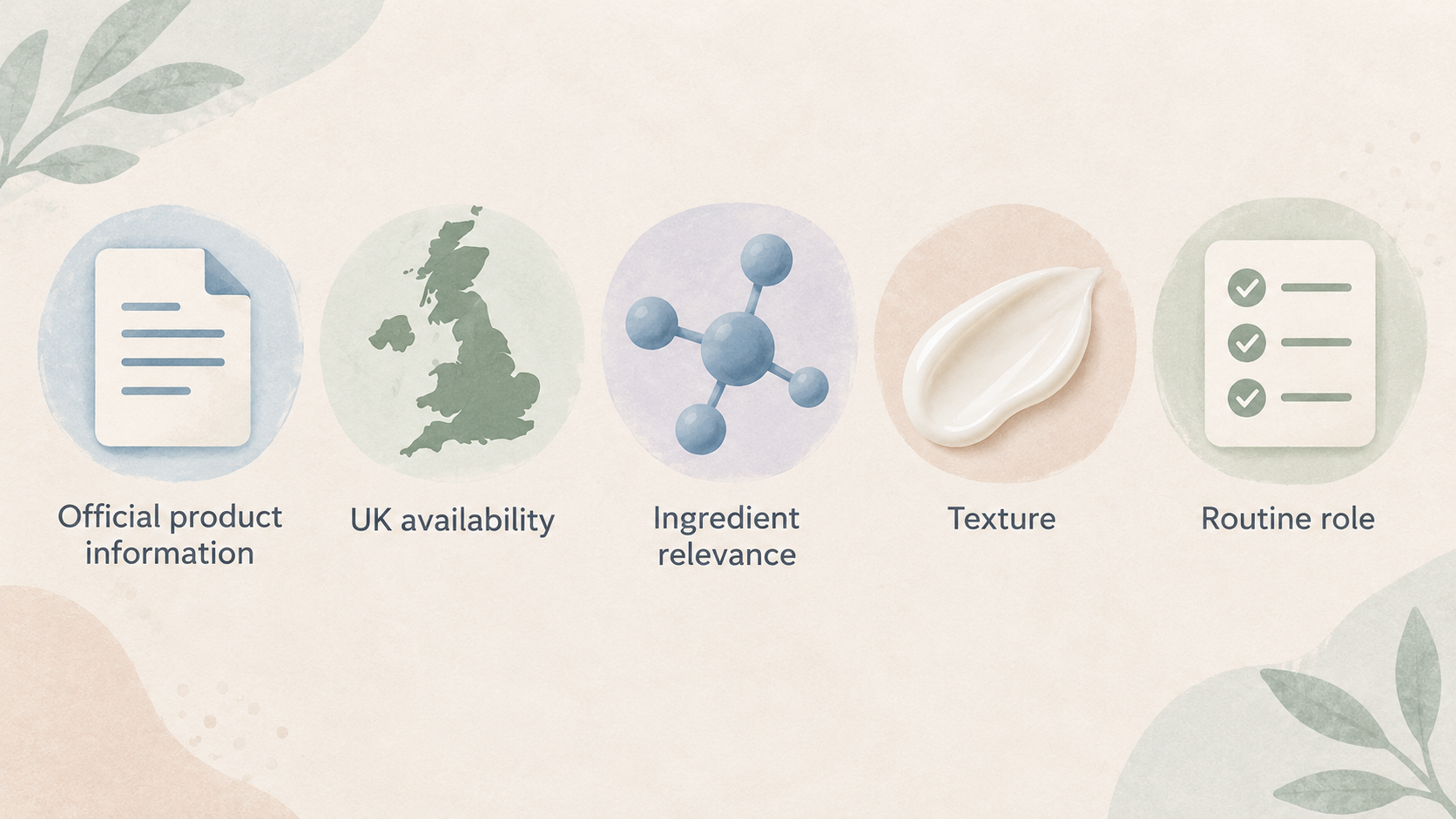
The names “best” and “repair” need context. This is not a universal ranking and no formula is right for every face. The shortlist is based on current official product information, accessible UK availability, ingredient relevance, texture, and the clarity of each product’s intended routine role.
1. CeraVe Moisturising Cream: the practical ceramide baseline
CeraVe Moisturising Cream is the most conventional starting point here. The brand positions it for dry to very dry skin and highlights three essential ceramides plus hyaluronic acid. The formula direction is familiar: a cream designed to combine water-binding support with a more substantial emollient base.
That matters because a barrier-supportive routine is usually easier to keep consistent when the moisturiser is simple enough to use morning and night. CeraVe’s UK range explains that its moisturisers use three essential ceramides and its MVE delivery technology; the cream is sold as a rich face-and-body option. It is not a promise that ceramides will fix every form of irritation, but it makes this a sensible product to compare when you want a widely available cream without fragrance-led positioning.
Who it may suit: dry or normal-to-dry skin, people who prefer one moisturiser for face and body, and routines that need a steady cream after gentle cleansing or after a serum. It is also the easiest bridge from our face serums by skin goal guide: choose the serum for the concern, then choose the moisturiser for the skin’s current tolerance and dryness.
Routine position: after watery serums, before daytime sunscreen. At night, it can be the final cream step. If your skin is temporarily stinging from actives, reduce the number of active steps rather than treating this cream as permission to continue pushing them.
Tolerance and packaging notes: “Fragrance-free” can be useful for people avoiding fragrance, but it does not guarantee that every individual will tolerate it. The tub format is practical for body use but less elegant than a pump if you strongly prefer minimal finger contact. Use clean, dry hands or a spatula if that matters to you.
Value lens: compare price per 100 ml or per 100 g, not only the shelf price. A larger tub may be better value for body use, but only if you will use it regularly before its period-after-opening date.
2. La Roche-Posay Cicaplast Baume B5+: a richer recovery-layer option
La Roche-Posay Cicaplast Baume B5+ is the more deliberately protective-feeling choice in this group. The current UK ingredient list includes glycerin, dimethicone, shea butter, panthenol, Centella asiatica leaf extract, madecassoside and zinc gluconate. That combination points toward a balm-cream built to soften, reduce the feeling of dryness, and leave a more buffered finish than a standard lotion.
The formula is relevant for people who are not necessarily looking for a new permanent daily cream, but need a richer layer when their routine has become uncomfortable. Think of periods after cold wind, over-cleansing, mask friction, or introducing actives too quickly. The brand says it can be used on face, body, and lips, but also advises avoiding the eye contour area and checking the package ingredient list for the most current formula.
Who it may suit: dry, reactive-feeling skin that wants a creamier finish; people who apply a richer product mainly at night; and users who prefer a targeted recovery layer over a full face-and-body tub.
Routine position: use after moisturising serums and before sunscreen in the morning only if the finish works for you. Many people will find it more comfortable as the last evening step or on dry zones such as around the nose, mouth, or hands. It is not automatically the right choice for every acne-prone routine; a richer film can feel heavy for some people.
Tolerance and evidence limits: panthenol and madecassoside are common reasons shoppers notice this product, but an ingredient name does not predict an identical response for everyone. Patch test when you are reactive, and stop if a persistent rash, swelling, or worsening irritation develops. DermNet’s moisturiser guidance notes that sensitive skin can experience burning or stinging and that contact allergy to components, including preservatives, can occur.
Value lens: the smaller tube can make sense when you use it selectively. If you need a high-volume whole-body moisturiser, compare its cost per 100 ml against a larger basic cream rather than assuming a richer formula is automatically better value.
3. Avène Cicalfate+ Restorative Protective Cream: the targeted protective finish
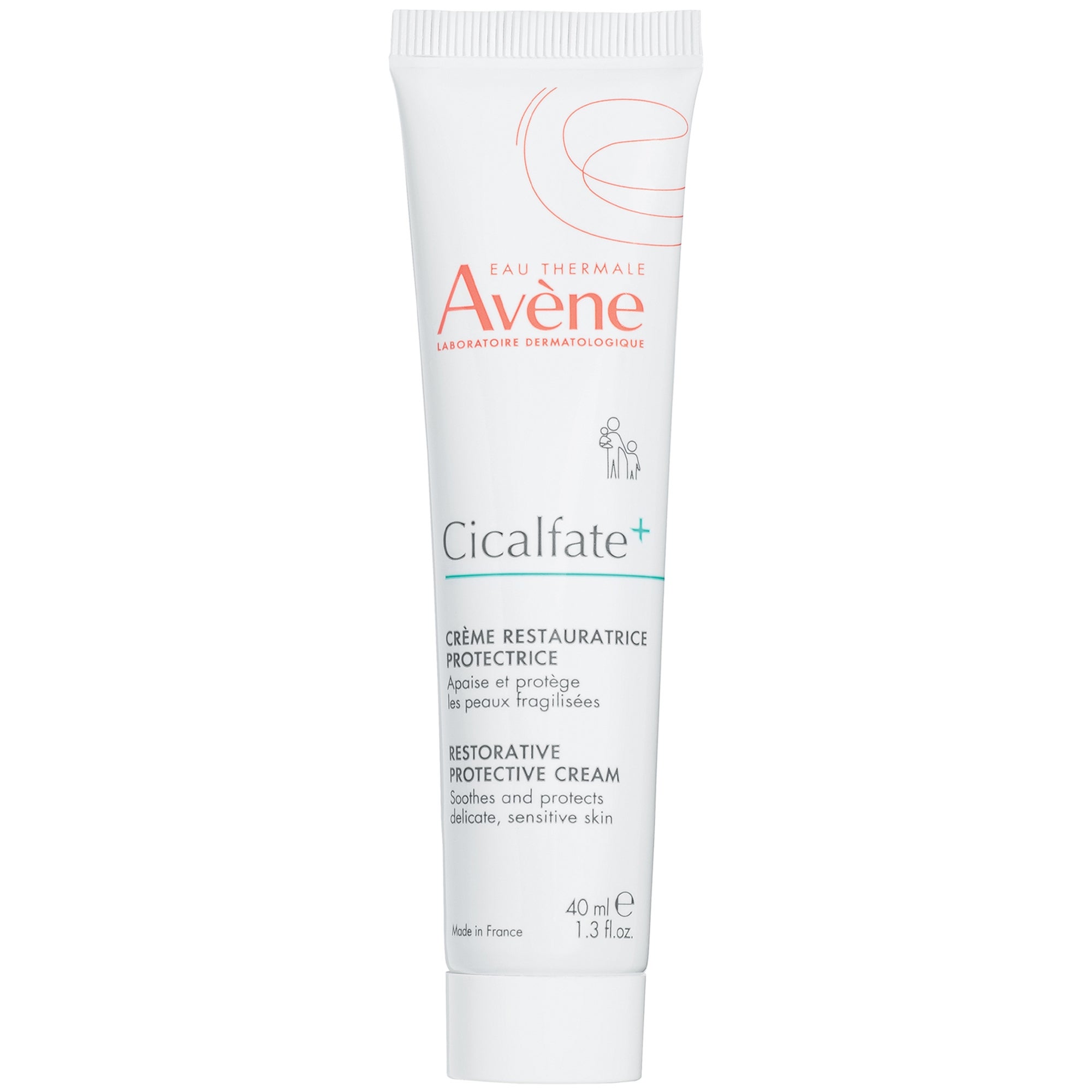
Avène Cicalfate+ Restorative Protective Cream is the most specialised-feeling option in this shortlist. Avène describes a formula built around its thermal spring water, C+Restore postbiotic ingredient, and a copper-zinc complex. The published ingredient context also includes glycerin, mineral oil, zinc oxide and other texture-supporting components, which helps explain why this product reads as a protective cream rather than a lightweight daily hydrator.
The sensible editorial interpretation is not that it “heals” all skin problems. Instead, its thicker, more occlusive profile may make it useful when you want to keep a vulnerable-feeling patch from feeling exposed to dry air, friction, or repeated cleansing. That makes it a plausible option for selected areas and nighttime use, particularly for people who find ordinary lotions disappear too quickly.
Who it may suit: people who want a protective cream for specific dry or irritated-feeling zones, those who prefer a richer final step, and routines where a standard ceramide cream still feels too light.
Routine position: use as the final layer over a simple hydrating routine, or only on the areas that need it. A targeted application is often more practical than treating it as an all-over daytime moisturiser. Under sunscreen, test for pilling and comfort rather than assuming compatibility.
Tolerance and packaging notes: its protective, occlusive direction may be welcome on flaky areas but too much for people who dislike film-forming textures or are currently managing congestion. Avoid applying any product to open, infected, or severely inflamed skin without appropriate medical guidance. The brand’s “restorative” language should not be confused with a diagnosis or treatment plan.
Value lens: this is a product to judge by use case. It can be economical if a small amount is used on recurring dry areas, but less so if you need a large-volume, twice-daily moisturiser for the whole body.
How to choose between the three
Start with your main problem, not the longest ingredient list.
Choose CeraVe Moisturising Cream when you need a dependable, broad-use cream and want ceramides plus a familiar moisturiser texture. It is the sensible first comparison point if your skin is dry but not asking for a very heavy finish.
Choose Cicaplast Baume B5+ when your routine needs a richer, more cushioning final layer after dryness, friction, or an active-heavy period. It is most compelling when you want something more substantial than a daily cream but less ointment-like than a classic petrolatum product.
Choose Cicalfate+ when the task is a more protective, targeted finish. It is not automatically “stronger” or better; it is simply more likely to suit a user who values an occlusive feel on selected areas.
If all three sound wrong, that is useful information. Very oily skin may prefer a lighter moisturiser; people with known contact allergies should review full INCI lists; persistent eczema, facial dermatitis, rosacea, or acne may need advice beyond an affiliate review. DermNet’s guidance on irritant contact dermatitis is a useful reminder that avoiding the trigger and using appropriate emollients can both matter.
A lower-irritation routine around a barrier moisturiser
A barrier repair moisturiser works best when the rest of the routine stops competing with it.
- Cleanse gently. Use a mild cleanser and avoid repeated hot-water washing when skin is dry or reactive.
- Pause the obvious irritant. This may be frequent acids, strong retinoid use, fragranced products, or aggressive scrubbing. Do not add several new “soothing” products at once.
- Apply the moisturiser while skin is slightly damp. This can make a humectant-containing formula more comfortable without needing extra layers.
- Use sunscreen in daylight. A moisturiser is not sunscreen, even if it feels protective.
- Reintroduce actives slowly. When skin is comfortable again, bring back one active at a time rather than returning immediately to the previous frequency.
This is also why an ingredient-led review desk is more useful than a universal ranking. The product is only one variable; cleansing, active frequency, weather, and the amount applied affect the outcome too. Browse our home page for future routine guides and brand comparisons built around those decisions.
FAQ
What are the best barrier repair moisturisers for dry skin?
There is no single product that is objectively right for all dry skin. CeraVe Moisturising Cream is a practical ceramide-focused daily option, Cicaplast Baume B5+ offers a richer balm-cream feel, and Cicalfate+ is more suited to a protective, targeted finish. Choose according to texture tolerance, where you will use it, and whether you need an all-over or selective product.
Can I use a barrier repair moisturiser with retinol or exfoliating acids?
Often, yes, but the moisturiser does not remove the possibility of irritation from retinoids or acids. If your skin is stinging, peeling, or unusually reactive, simplify the routine and reduce or pause the active rather than layering more products over the problem. Reintroduce actives gradually once comfort returns.
Are ceramides enough to repair a damaged skin barrier?
Ceramides are relevant to the skin’s lipid matrix, but they are not a guarantee of a specific result. A useful moisturiser may also rely on humectants and occlusives, while routine changes such as gentler cleansing and less frequent active use can be equally important.
Is Cicaplast Baume B5+ suitable for acne-prone skin?
It can work for some acne-prone people, especially as a limited nighttime or targeted product, but the richer texture may not suit everyone. If you are prone to congestion, introduce it gradually and assess your skin rather than assuming “barrier repair” automatically means non-comedogenic for you.
Should I use Cicalfate+ all over my face?
You can choose to, but many people may prefer it on dry or irritated-feeling zones because of its more protective texture. If it feels heavy, pills under sunscreen, or seems to worsen congestion, reserve it for nighttime or targeted areas and use a lighter moisturiser elsewhere.
The bottom line
The useful “best barrier repair moisturiser” is the one whose texture and ingredient direction you can use consistently without making your routine more complicated. CeraVe is the straightforward daily cream, Cicaplast Baume B5+ is the richer buffer, and Cicalfate+ is the protective targeted layer. Start with the routine problem you are trying to solve, keep the rest of the routine quiet, and give the formula time before adding another product.
Affiliate disclosure: Dave Roberts may earn a commission when readers purchase through qualifying links. Editorial coverage is selected for routine relevance and source transparency, not in exchange for a promised positive verdict. Read our editorial policy for the full approach.
Sources
- CeraVe Moisturising Cream, UK official product page
- La Roche-Posay Cicaplast Baume B5+, UK official product page
- Avène Cicalfate+ Restorative Protective Cream, UK official product page
- DermNet: Barrier cream
- DermNet: Emollients and moisturisers
Editorial information: Read our affiliate disclosure.