Chemical exfoliation can look deceptively simple: pick an acid, swipe it on, expect smoother skin. In practice, the useful decision happens earlier. Are you trying to address dull-looking surface texture, recurring congestion, or a routine that reacts whenever another active is added?
AHA, BHA and PHA are not three grades of the same product. They are tools with different routine roles. The right starting point is the acid that matches one clear skin goal and leaves enough room for moisturiser, daily SPF and recovery—not the strongest formula or the longest ingredient list.
This guide is editorial skincare information, not medical advice. If you have persistent irritation, inflammatory acne, eczema, a damaged skin barrier, or use prescription treatment, ask a dermatologist before adding a leave-on acid.
Disclosure: This page may contain affiliate links. They never change the editorial criteria, and product information should be checked on the brand or retailer page before purchase. Read our editorial policy and learn how this review desk works on About.
The fast answer: choose by the problem you are actually trying to solve
AI-generated illustration — not a retailer product photo.
| Acid family | Common examples | Practical routine fit | Start cautiously if | Main limitation |
|---|---|---|---|---|
| AHA | Glycolic, lactic, mandelic acid | Uneven-looking texture, dullness, rough-feeling surface skin | You are new to direct acids or use retinoids | Can feel too active for a compromised or reactive barrier |
| BHA | Salicylic acid, betaine salicylate | Congestion, visible oiliness and clogged-pore concerns | You are dry, sensitive or already using several acne actives | A pore-focused goal does not make daily use necessary |
| PHA | Gluconolactone, lactobionic acid | A cautious exfoliating entry point and texture support | Your skin is currently irritated; pause rather than push through | “Gentler” does not mean irritation-proof |
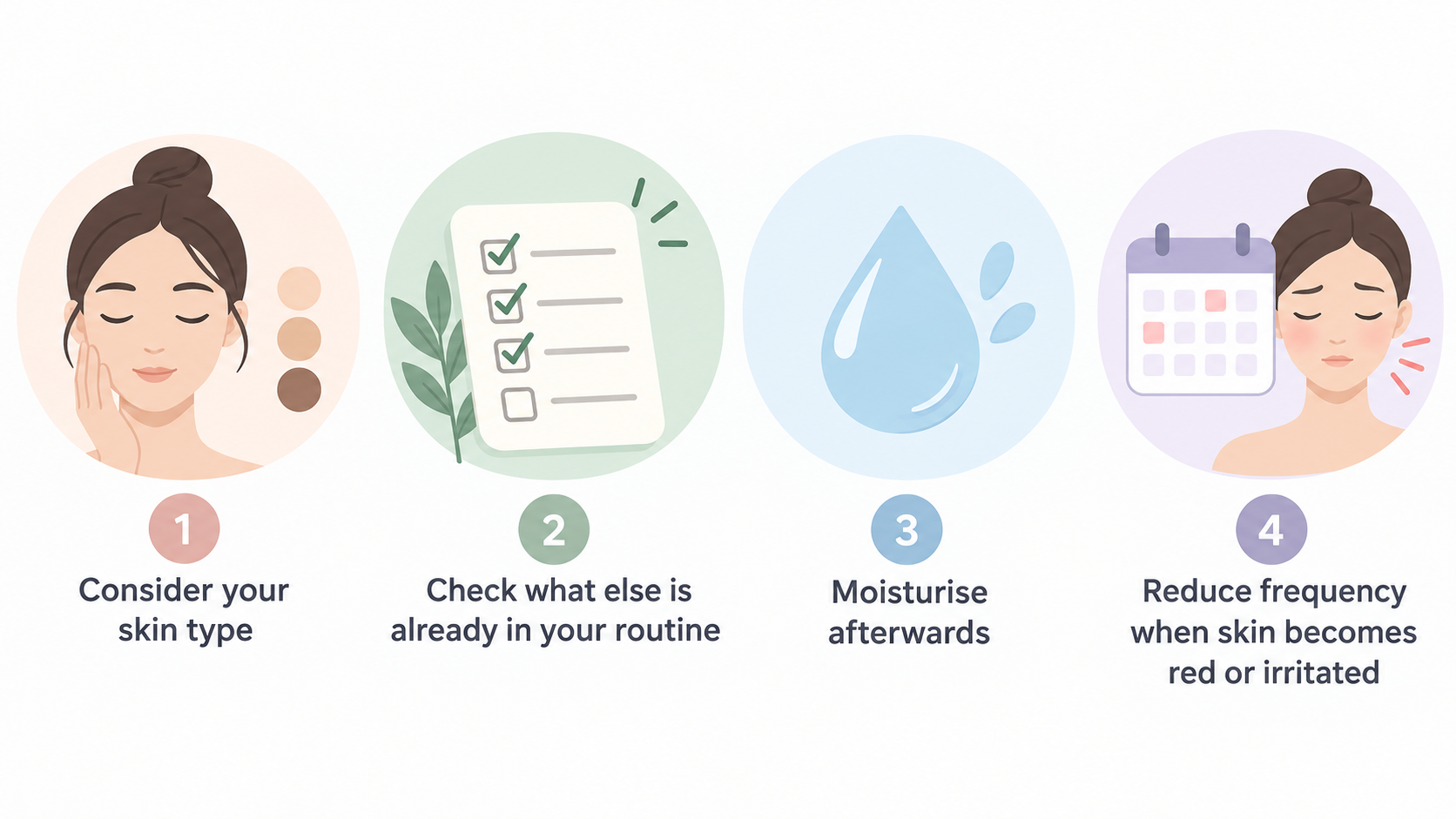
The American Academy of Dermatology describes chemical exfoliation as using ingredients such as alpha and beta hydroxy acids to remove dead skin cells. Its practical advice is more useful than any acid hierarchy: consider your skin type, check what else is already in your routine, moisturise afterwards, and reduce frequency when skin becomes red or irritated. AAD guidance also notes that more aggressive exfoliation generally needs less frequent use.
AHA: the route for texture-led routines
AI-generated illustration — not a retailer product photo.
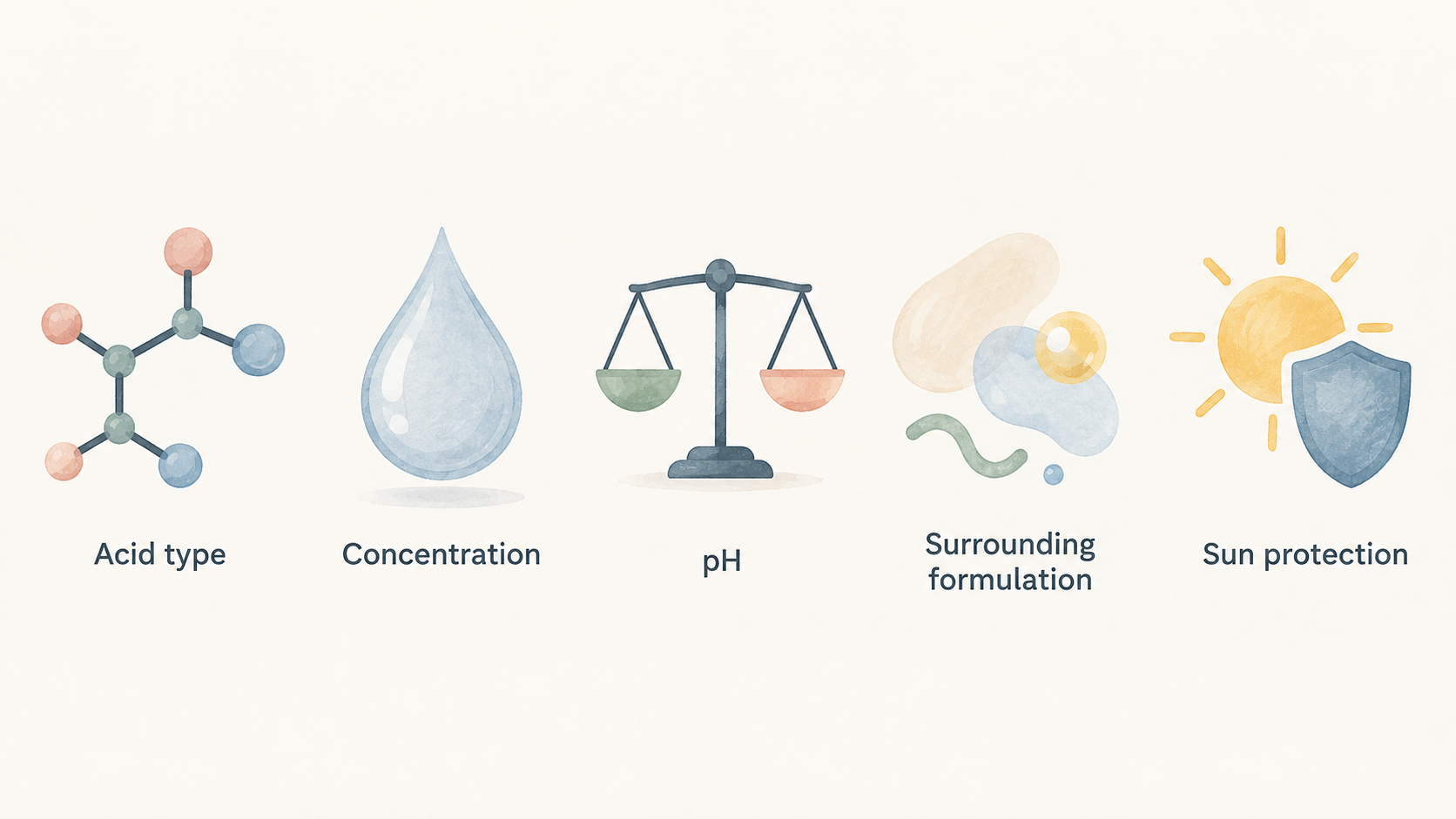
AHA means alpha hydroxy acid. In cosmetic products, glycolic and lactic acid are common examples. The FDA notes that AHA exfoliation depends on the acid type, concentration, pH and surrounding formulation, so an “AHA product” is not enough information on its own. FDA’s AHA overview also advises sun protection because AHA use can increase sensitivity to sun exposure.
An AHA makes sense when the question is mainly: “My skin looks dull or feels uneven—how do I add one deliberate exfoliating step?” It is less suitable as a reflex response to every spot or every rough patch. If your face is already stinging after cleansing, peeling around the nose, or reacting to basic moisturiser, the immediate job is recovery rather than another active.
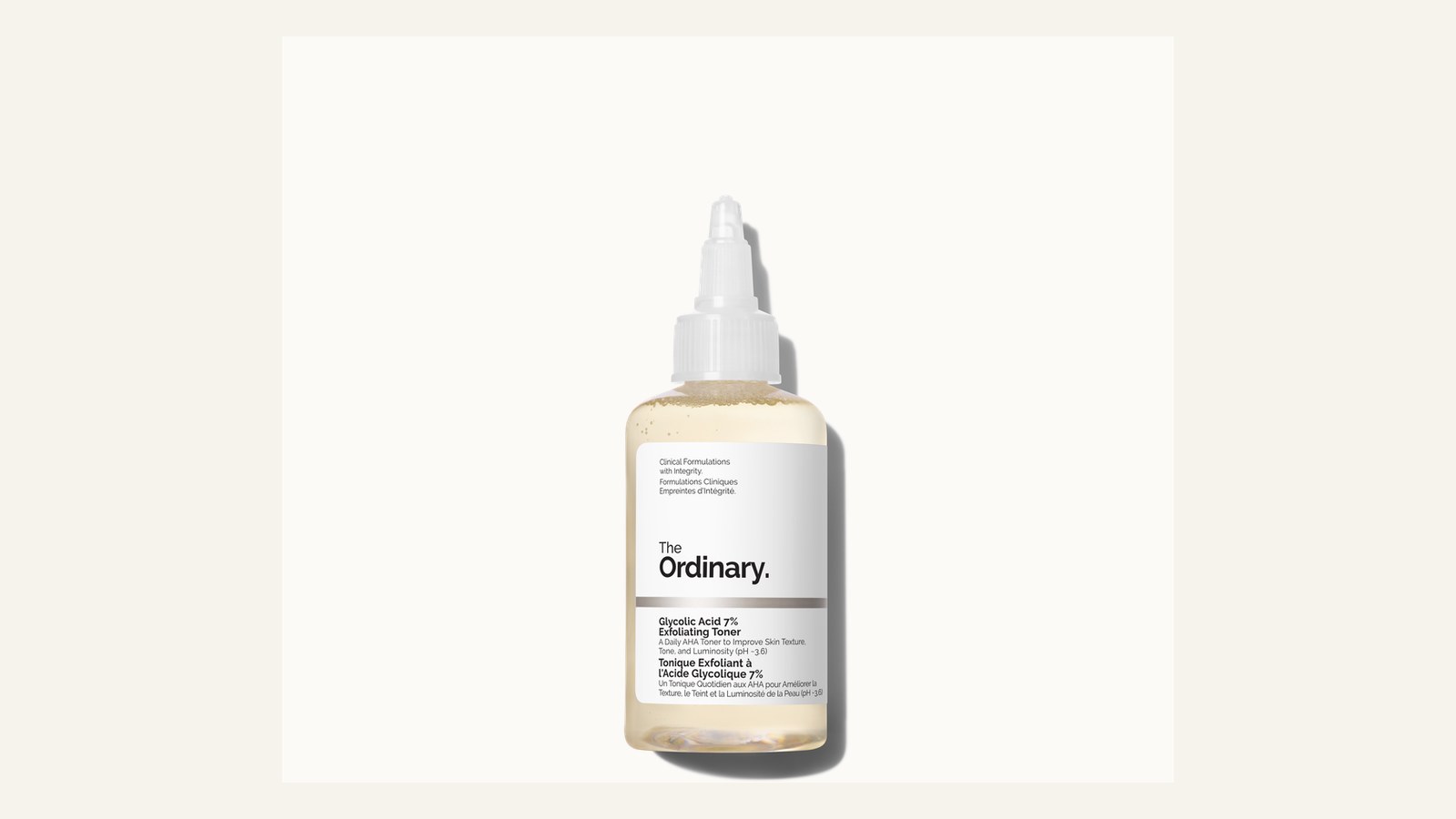
Product context: The Ordinary Glycolic Acid 7% Exfoliating Toner
The Ordinary Glycolic Acid 7% Exfoliating Toner is a water-based 7% glycolic-acid AHA toner. The brand positions it for textural irregularities, dullness and uneven tone, and lists a pH range of 3.5–3.9. It also says not to use it on sensitive, peeling or compromised skin, and advises sun protection.
That product is a useful illustration of why AHA is not a casual “glow” category. A 7% leave-on glycolic toner is a clear active step, not a neutral hydrating toner. Readers who choose it should give it a defined evening slot, moisturise afterwards and avoid treating the same routine as a place for another direct acid. The packaging is a functional squeeze-cap bottle rather than opaque airless packaging, so keep the cap closed and avoid storing it in a hot, sunny bathroom window.
Choose AHA when surface texture is the main priority and your barrier is stable. Do not choose it because a routine feels ineffective after only a few days.
BHA: the route for congestion-led routines
BHA usually refers to salicylic-acid family exfoliants in skincare. The practical appeal is not that BHA is universally “deeper” or “stronger”; it is that it is commonly used in routines centred on visible oiliness, recurring congestion and clogged-pore concerns.
A BHA routine still needs restraint. Acne treatments, retinoids, benzoyl peroxide and exfoliating cleansers can all change tolerance. A reader who has already built a multi-active acne routine should not assume that adding a leave-on BHA will improve it. The AAD specifically warns that products such as retinol, prescription retinoids and benzoyl peroxide can make skin more sensitive, and that exfoliation alongside them may worsen dryness or breakouts.
Product context: Paula’s Choice Skin Perfecting 2% BHA Liquid Exfoliant
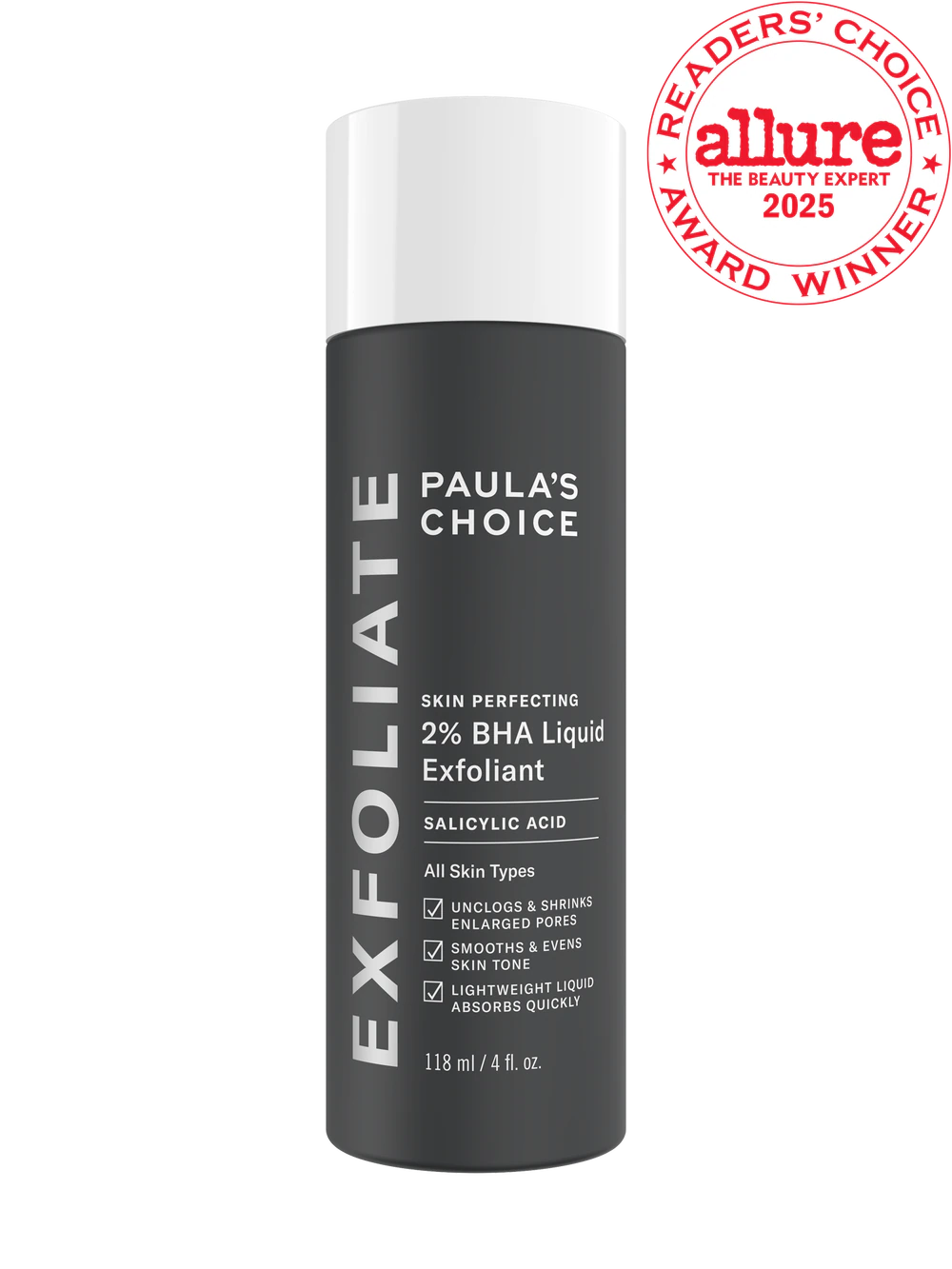
Paula’s Choice Skin Perfecting 2% BHA Liquid Exfoliant is a leave-on 2% BHA product. Its value as an example is clarity: the active and concentration are explicit, so the reader can judge it as a purposeful exfoliating step rather than an undefined “pore toner.”
For a congestion-led routine, that clarity matters more than a long list of supporting extracts. Start by deciding where it sits: after cleansing, before a simple moisturiser, on a limited number of evenings per week. If your routine also includes retinoids, benzoyl peroxide or another acid, alternate rather than stacking all of them in one session. If stinging, tightness or persistent flaking develops, reduce use or stop and return to a basic barrier-support routine.
BHA can be a sensible match for a reader whose concern is congestion. It is not a promise that all spots are caused by blocked pores, and it is not a substitute for professional acne care.
PHA: the cautious route, not a risk-free one
PHA means polyhydroxy acid. Common examples include gluconolactone and lactobionic acid. In routine terms, PHA is often considered by readers who want some exfoliating support but do not want to begin with a more assertive direct-acid product.
The important distinction is between “more cautious” and “safe to overuse.” A PHA product can still be a leave-on active, can still contain other acids, and can still be poorly timed for irritated skin. The useful question is not “Is PHA gentle?” but “What else is in this formula, and what else is in my routine?”
Product context: Glow Recipe Watermelon Glow PHA+BHA Pore-Tight Toner
Glow Recipe Watermelon Glow PHA+BHA Pore-Tight Toner is a useful example of why product labels deserve close reading. The brand lists 3% PHA + 2% BHA, including gluconolactone and betaine salicylate, alongside humectants and fruit extracts. It is therefore a mixed-acid product, not a pure PHA comparison point.
That makes it relevant for a reader whose goals overlap: some texture support, some congestion support and a preference for a more hydrating-feeling toner format. It does not make it automatically suitable for every sensitive skin routine. The formula also includes multiple botanical components, so readers with known fragrance or botanical sensitivities should review the full ingredient list rather than rely on the acid label alone.
If you are comparing PHA with AHA or BHA, remember that a finished product can combine categories. Choose by the whole formula, the concentration disclosed, your routine load and how your skin responds over several weeks.
A simple decision tree for choosing one acid
Start with one question:
- Uneven-looking texture, dullness or rough-feeling surface skin: consider AHA, provided your barrier is stable.
- Congestion, oiliness or clogged-pore concerns: consider BHA, while keeping the rest of the routine uncomplicated.
- You want a cautious entry point or a more hydrating-feeling acid format: consider PHA, but check whether the formula also contains AHA or BHA.
- Your skin is burning, peeling, inflamed or reactive to bland products: do not choose an acid yet. Focus on gentle cleansing, moisturiser and sunscreen, then reassess.
This is also the point to protect the rest of the routine. Pairing an exfoliant with an appropriate daily SPF is not an optional “extra,” especially for AHA users. For product-format comparisons, see our guide to facial sunscreens for daily wear. If your skin is dry or reactive, a barrier-first plan may be more useful than a new active; our barrier repair moisturiser comparison can help frame that next step.
How to introduce an exfoliating acid without making the routine harder
Use a simple baseline: cleanser, moisturiser and daytime SPF. Add one leave-on acid product at a time, initially on separate evenings from other strong actives. Keep the surrounding steps bland enough that a reaction is easier to interpret.
Patch testing can reduce surprises but cannot guarantee that a face application will be tolerated. Apply only to intact skin and stop if you get sustained burning, swelling, a rash or worsening irritation. The FDA’s AHA safety guidance is particularly relevant here: product performance and irritation potential are shaped by formulation details, not just the percentage printed on the label.
Avoid measuring success by a temporary tingle. The better outcome is a routine you can repeat without escalating redness, tightness or flaking. If you want to keep active steps minimal, compare this choice with our niacinamide vs vitamin C guide and the serums-by-skin-goal shortlist.
The verdict: choose the smallest useful change
AHA is the logical starting point for texture-led goals when the skin barrier is settled. BHA is the more direct category to investigate when congestion is the central concern. PHA can make sense for readers who want a more cautious exfoliating route, but the label matters: many formulas combine acid families.
The strongest routine is usually not the one with all three. It is the one with a clear goal, one well-chosen exfoliating step, enough recovery around it and consistent sunscreen use.
FAQ
Can I use AHA, BHA and PHA together?
You can find formulas that combine acid families, but adding separate AHA, BHA and PHA products to the same routine makes irritation harder to predict and diagnose. Start with one product and assess tolerance before adding another active. If your skin becomes persistently red, tight or flaky, pause the acids rather than increasing frequency.
Is PHA always better for sensitive skin?
No. PHA is often chosen for a more cautious approach, but sensitivity depends on the full formula, current barrier state, frequency and what else you use. A PHA product may also contain BHA, AHA, fragrance components or other ingredients that matter to your skin. Sensitive or compromised skin may need a pause from exfoliation altogether.
Should I use an exfoliating acid in the morning or evening?
Evening is often the simpler starting point because it makes routine spacing easier. If you use an AHA, follow the product directions and use daily sun protection. Do not add an acid simply because it is morning or evening; choose a schedule you can maintain without stacking it carelessly with other strong actives.
Can I use an acid exfoliant with retinol?
Using both in the same routine can be too much for many people, especially when starting. Consider alternating nights and keeping moisturiser and SPF consistent. The AAD notes that retinoids and retinol can make skin more sensitive, so a new exfoliant should be introduced slowly rather than layered automatically.
Sources
- American Academy of Dermatology: How to safely exfoliate at home
- FDA: Alpha Hydroxy Acids
- The Ordinary: Glycolic Acid 7% Exfoliating Toner
- Paula’s Choice: Skin Perfecting 2% BHA Liquid Exfoliant
- Glow Recipe: Watermelon Glow PHA+BHA Pore-Tight Toner
Title Candidates
- AHA vs BHA vs PHA: Which Exfoliating Acid Fits Your Skin Goal, Routine, and Tolerance?
- AHA, BHA or PHA? Choose One Acid Before You Build a Complicated Routine
- AHA vs BHA vs PHA: A Clear Routine Guide for Texture, Congestion, and Sensitive Skin
- Stop Stacking Acids: How to Choose Between AHA, BHA, and PHA
- AHA vs BHA vs PHA: The Practical Difference Before You Buy Another Exfoliant
Editorial information: Read our affiliate disclosure.